Adhesive backing allows a graphic overlay, nameplate, or printed panel to be mounted onto the equipment housing. Among the adhesive options used for graphic attachment, 3M™ High Performance Acrylic Adhesive 200MP is a well-established industrial adhesive family.
Two options in this family are 3M 467MP and 468MP. Both use 3M's 200MP acrylic adhesive system, but they differ mainly in adhesive thickness. This difference can affect how well the adhesive conforms to the mounting surface.
|
Feature |
3M 467MP |
3M 468MP |
|
|
|
|
|
Adhesive Family |
3M 200MP Acrylic Adhesive |
3M 200MP Acrylic Adhesive |
|
Product Type |
Adhesive Transfer Tape |
Adhesive Transfer Tape |
|
Adhesive Thickness |
~2.3 mil / 0.06 mm |
~5.2 mil / 0.13 mm |
|
Bond-Line Profile |
Thinner |
Thicker |
|
Surface Contact Consideration |
Can be considered where good contact can be achieved with a lower-profile bond line |
Additional thickness can improve wet-out on slight texture or irregularity |
|
Selection |
Depends on mounting surface and project structure |
Depends on mounting surface and project structure |
3M 467MP uses an adhesive layer of approximately 2.3 mil (0.06 mm).
Its relatively thin profile makes it suitable for applications where the mounting surface is smooth and good contact can be achieved between the adhesive and the housing. Common examples may include smooth metal and high-surface-energy plastic surfaces.
For graphic overlays and nameplates, a thinner adhesive layer can also help keep the overall panel construction compact without adding unnecessary thickness.
3M describes 467MP as providing strong shear performance and resistance to solvents and humidity for bonding metals and high-surface-energy plastics.
3M 468MP uses a thicker adhesive layer of approximately 5.2 mil (0.13 mm).
The additional adhesive thickness can improve wet-out when the mounting surface has slight texture or small surface irregularities. Better wet-out helps the adhesive make more complete contact with the mounting surface.
For this reason, 468MP may be considered when a graphic overlay or nameplate needs to be mounted on a surface where a thinner adhesive would provide less complete contact.
Like 467MP, 468MP belongs to the 3M 200MP adhesive family and is designed for bonding metals and high-surface-energy plastics.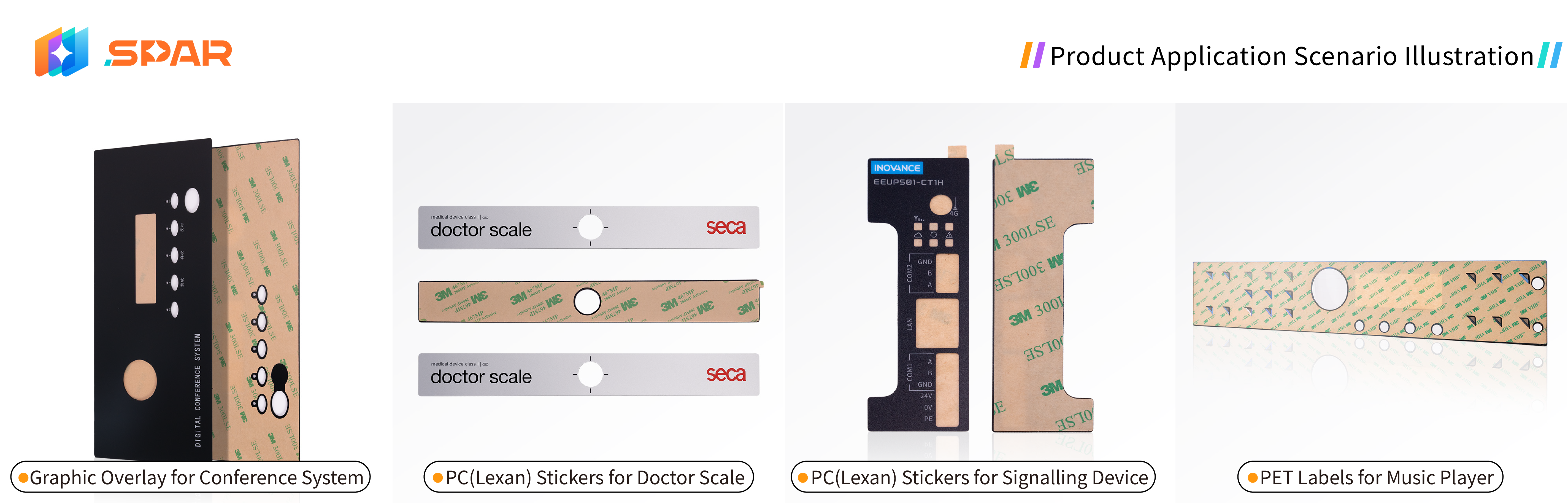
The main product difference between 467MP and 468MP is adhesive thickness. When selecting between them, the condition of the mounting surface is an important factor to consider.
For a smooth and even surface, a thinner adhesive such as 467MP may provide the required contact while keeping the adhesive layer relatively thin.
When the surface has slight texture or irregularity, the thicker adhesive layer of 468MP can provide improved wet-out and surface contact.
However, adhesive selection should not be based on surface texture alone. The housing material, surface condition, panel size, adhesive area, installation structure, and project requirements should also be considered.
For powder-coated, painted, or textured housings, the actual surface condition should be reviewed before the adhesive is selected. A thicker adhesive such as 468MP may be useful where additional wet-out is required, but the final choice should be based on the specific mounting surface.
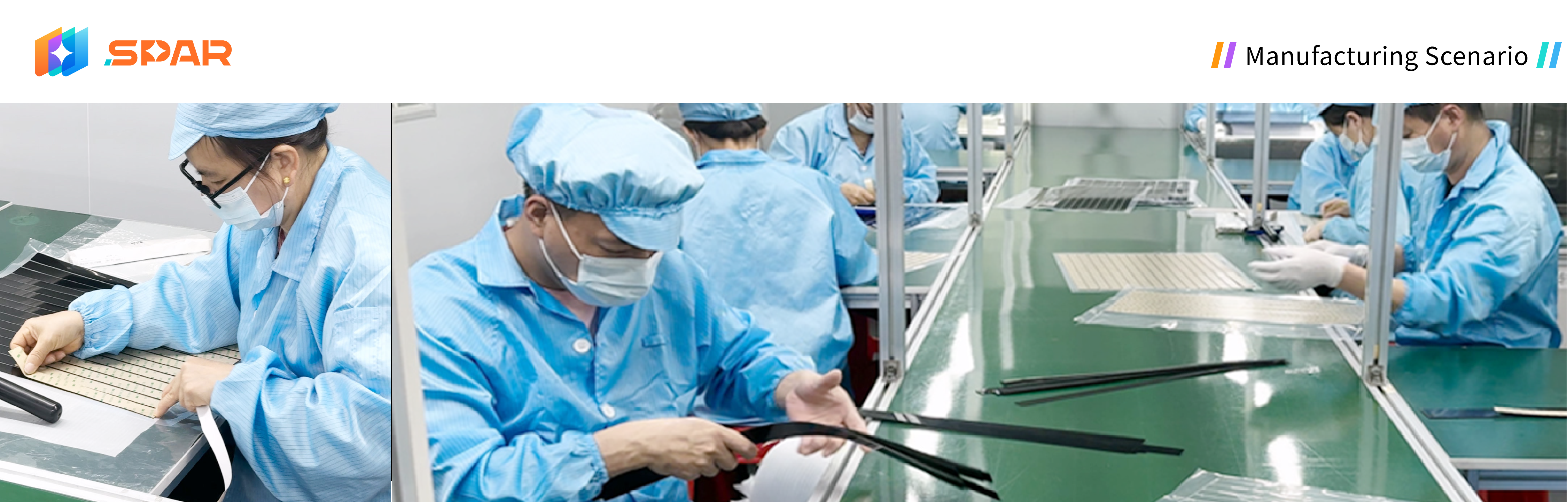
At Spar Panel, double-sided adhesive backing can be applied to custom graphic overlays, nameplates, and other printed panels according to the panel structure and installation requirements.
A: The main difference is adhesive thickness. 467MP uses a thinner adhesive layer, while 468MP uses a thicker layer that can provide improved wet-out on slightly textured or irregular surfaces.
A: Not necessarily. Surface texture is only one factor in adhesive selection. The housing material, surface energy, panel structure, and installation requirements should also be considered.
A: It may be considered when additional wet-out is needed on a slightly textured surface. However, powder-coated and painted surfaces can vary, so the actual surface condition should be reviewed before selecting the adhesive.
A: No. 3M 467MP and 468MP are adhesive transfer tapes. They consist of pressure-sensitive acrylic adhesive supplied on a release liner without a central carrier.
A: No. Adhesive thickness is the main product difference, but selection should also consider the mounting material, surface condition and texture, panel size, adhesive area, installation structure, and other project requirements.
3M 467MP and 468MP use the same 200MP acrylic adhesive family but provide different adhesive thicknesses. 467MP offers a thinner bond line, while 468MP provides additional wet-out capability for surfaces with slight texture or irregularity.
For custom graphic overlays and nameplates, the appropriate adhesive should be selected according to the mounting surface, panel structure, and project requirements.
To discuss adhesive-backed graphic overlays or custom panels, please send Spar Panel your drawing, panel structure, and installation requirements.


