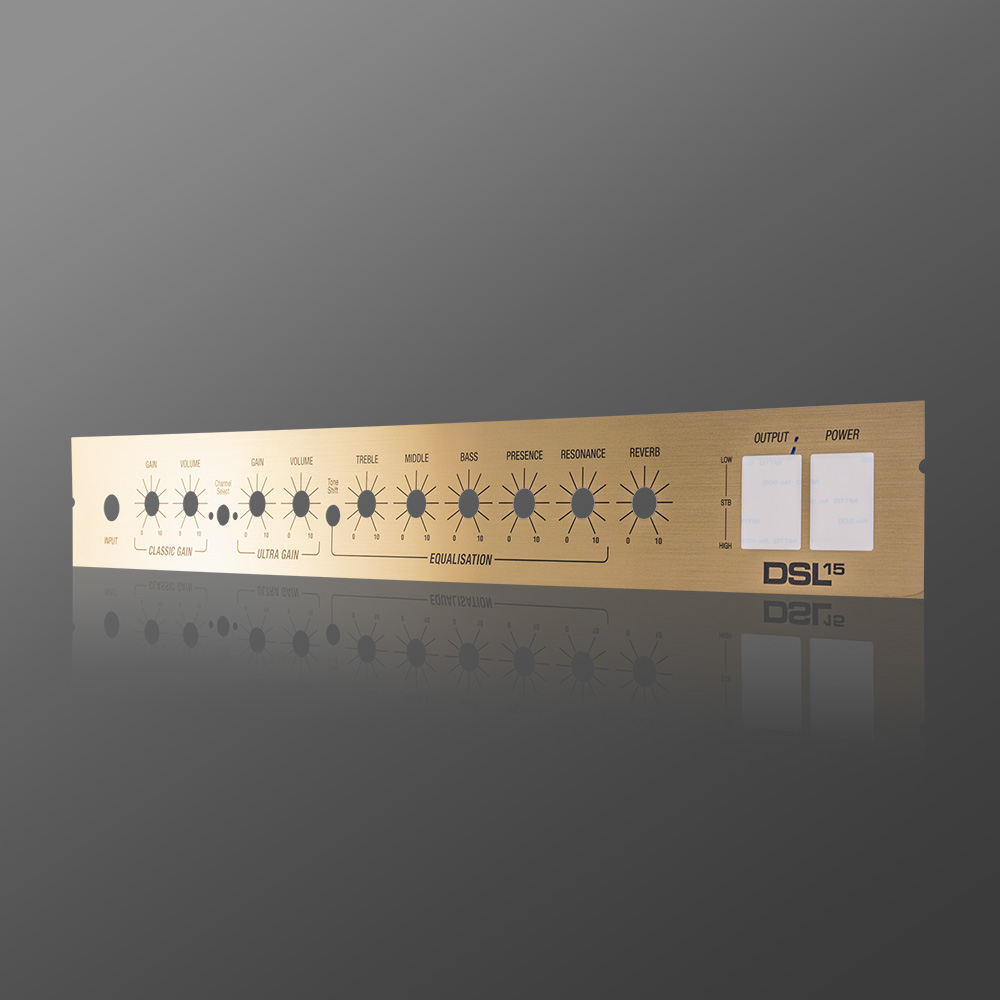
Adhesive backing allows a graphic overlay, nameplate, or industrial label to be attached to the surface of an equipment housing. It is usually applied to the back of the printed panel and selected according to the mounting surface, panel structure, and installation requirements.
For B2B buyers and engineers, understanding the basic role of adhesive backing can help when reviewing how a custom panel will be installed on the finished equipment.
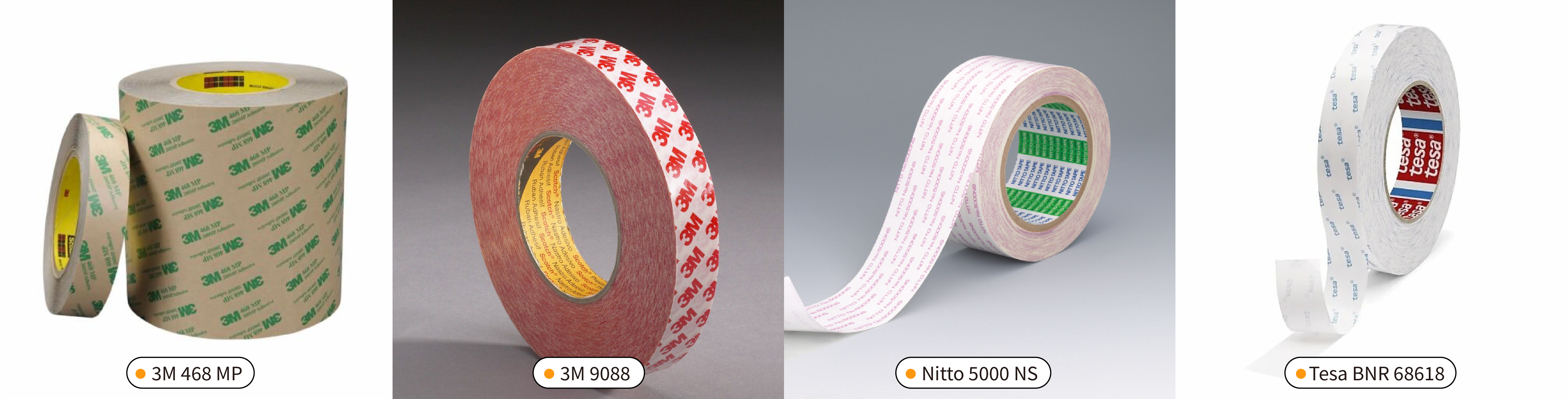
——Spar Panel commonly used tapes
Many graphic overlays, nameplates, and industrial labels use pressure-sensitive adhesives, commonly referred to as PSAs.
Pressure-sensitive adhesives are designed to form a bond when pressure brings the adhesive into close contact with the mounting surface. They do not normally require a separate liquid adhesive to be applied during installation.
In a typical panel structure, the adhesive backing bonds the back of the graphic overlay, nameplate, or label to the equipment housing. Depending on the product design, the adhesive can be die cut to follow the outer profile of the panel as well as windows, holes, and other openings.
Proper adhesive coverage helps maintain continuous contact between the panel and the mounting surface.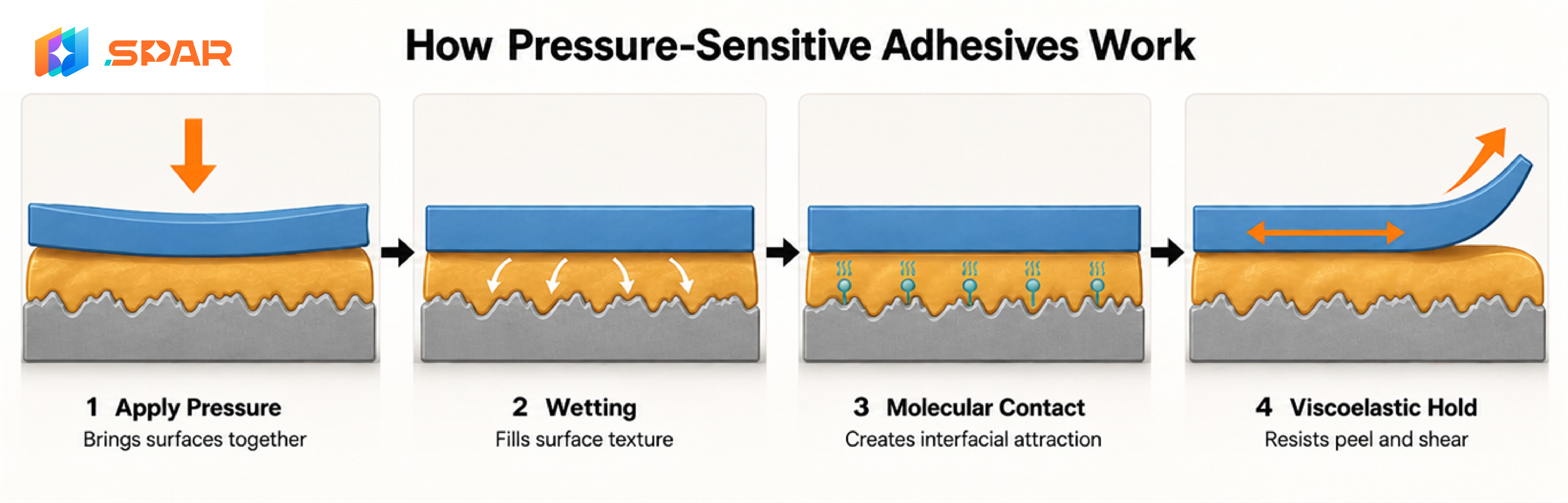
Adhesive selection is not simply about choosing the strongest or thickest option. The backing should be considered together with the actual mounting conditions.
Different housing materials have different surface characteristics, which can affect adhesive selection.
Metals and high-surface-energy plastics are commonly compatible with certain acrylic adhesive systems, while other plastic surfaces may require a different adhesive formulation.
The actual housing material should therefore be considered before the adhesive backing is selected.
Surface texture can influence how completely the adhesive contacts the housing.
A smooth, even mounting surface may allow a relatively thin adhesive construction to achieve good contact. When the housing has slight texture or surface irregularity, a thicker adhesive may provide improved wet-out by conforming more closely to the surface.
Surface texture is only one part of the selection process and should be considered together with the housing material and panel structure.
Temperature, humidity, and other exposure conditions may also affect adhesive selection.
The appropriate adhesive should therefore be chosen according to the intended equipment environment and the specific requirements of the project rather than by using one adhesive for every application.
Two common adhesive constructions used for industrial panels and labels are adhesive transfer tapes and double-coated tapes.
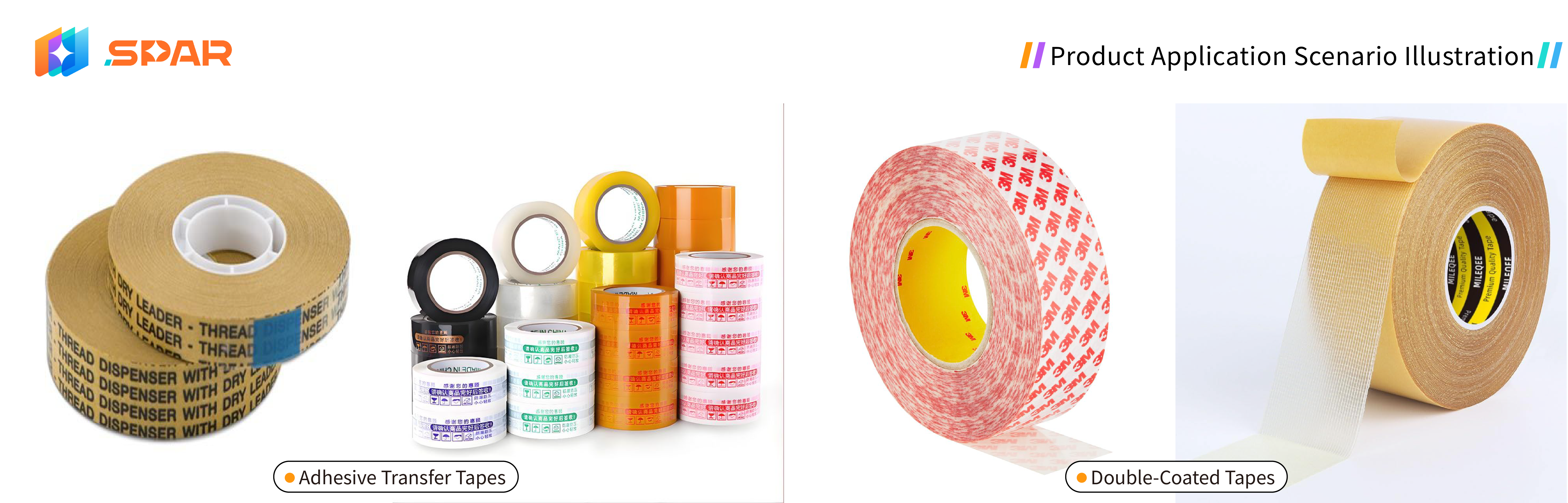
Adhesive transfer tape is a pressure-sensitive adhesive film supplied on a release liner, without a central carrier.
This carrier-free structure is typically thin and conformable, making it useful for applications that require a low-profile adhesive backing. It can be die cut to match panel outlines, windows, openings, or adhesive-free areas before being laminated to the back of the finished panel.
Compared with carrier-based tapes, however, transfer tapes generally offer less dimensional stability and handling support during converting and assembly.
Double-coated tapes use a carrier material positioned between adhesive layers on both sides. Common carrier materials include PET film, nonwoven fabric, foam, and other substrates.
The carrier improves dimensional stability, handling performance, and structural support. It can also add functions such as cushioning, insulation, light blocking, or gap filling, depending on the material used.
The final adhesive construction should be selected based on the panel design, mounting surface, thickness requirements, die-cutting complexity, application environment, and installation needs.
Adhesive backing is only one part of the complete panel structure.
A custom graphic overlay or label may also include printed graphics, display windows, cutouts, embossed areas, transparent sections, or other features according to the customer drawing and artwork.
The adhesive layer can then be die cut to match the finished panel structure so that windows, openings, and other functional areas remain correctly positioned during installation.
At Spar Panel, double-sided adhesive backing can be added to custom graphic overlays, nameplates, labels, and other printed panels according to the panel structure and project requirements.
Applying pressure helps the adhesive make close contact with the mounting surface. Better contact supports proper wet-out and bonding.
Yes. Adhesive thickness can affect how well the adhesive conforms to the mounting surface. A thicker adhesive may provide better wet-out on slight texture, while a thinner construction can help maintain a lower-profile panel structure on smooth surfaces.
Yes. Adhesive backing can be die cut to follow the outer profile, windows, holes, cutouts, and other adhesive-free areas of a graphic overlay or label. The adhesive layout should follow the confirmed panel drawing so that functional areas remain free of unwanted adhesive.
Adhesive backing provides the mounting layer between a graphic overlay, nameplate, or label and the equipment housing.
Selecting the appropriate backing requires consideration of the mounting surface, surface texture, panel structure, and intended operating conditions. Transfer tapes and double-coated tapes provide different construction options depending on the project requirements.
Once these basic factors are understood, specific adhesive products can be compared in more detail. For example, 3M 467MP and 468MP use the same 200MP acrylic adhesive family but differ in adhesive thickness and wet-out characteristics.
For custom graphic overlays or printed panels with double-sided adhesive backing, please send Spar Panel your drawing, panel structure, and installation requirements.