EV charging equipment needs more than an electrical connection. Its exterior interface may also need to present operating instructions, charging status, identification information, display areas, indicator markings, and other information that users or service personnel can recognize quickly.
Printed panels and labels help organize these physical interface elements. Depending on the charger design, they may take the form of graphic overlays, acrylic front panels, PC or PET labels, nameplates, or display-window parts produced to match the equipment drawing and artwork.
The application is becoming increasingly relevant as charging infrastructure expands. According to the International Energy Agency, the global stock of public charging points exceeded 7 million at the end of 2025 after increasing by more than 33% during the year.
For a custom panel manufacturer, however, the important question is not how the charging system works electrically. It is how printed information, viewing areas, openings, and exterior identification fit into the physical equipment interface.
A charging unit can place several types of information on the same exterior surface.
Operating symbols may identify a function or charging position. Printed instructions can guide the user through a physical step. Logos and product markings establish equipment identity, while other graphics may define indicator areas, connector positions, or different functional zones.
A custom printed panel brings these visual elements into a layout that follows the equipment structure.
For example, text positioned beside an indicator area should clearly relate to that area. A marking around an opening should follow the actual location of the component beneath or around the panel. Where several functions appear close together, graphic grouping helps distinguish one interface area from another.
The goal is not simply to place more information on the equipment. The printed graphics should correspond clearly with the physical features they describe.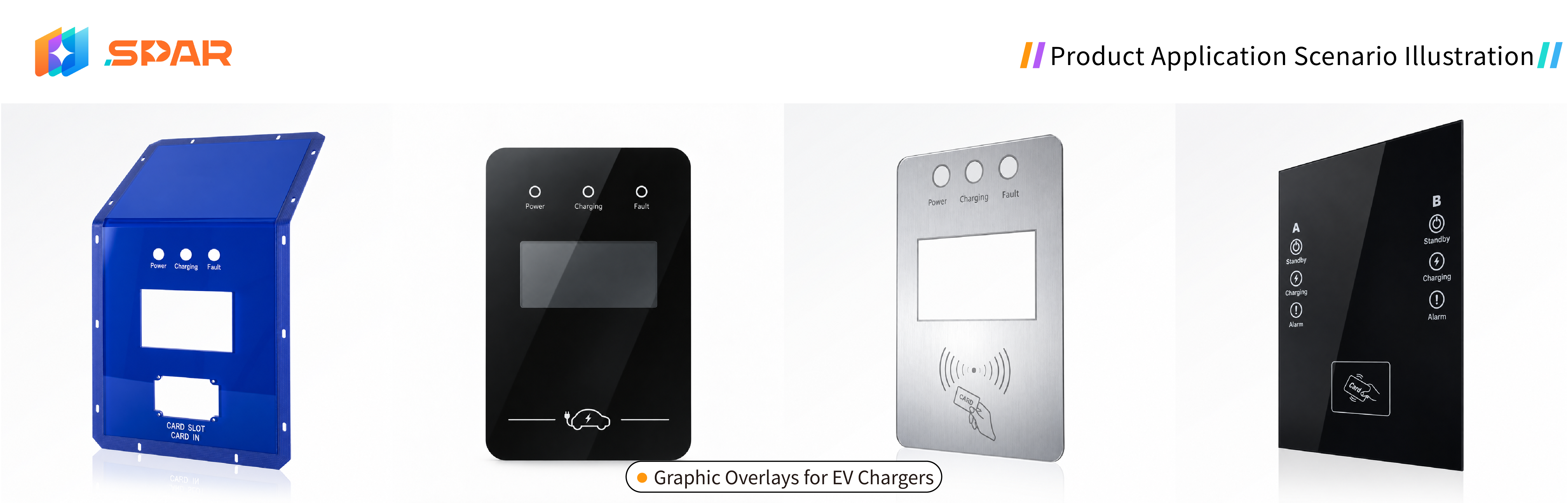
Many EV charging designs include displays, status indicators, or other visual interface areas. Printed panels can provide the surrounding graphics while leaving the required viewing zones clear.
An acrylic front panel may be used where the project requires a more substantial front-facing component with printed graphics and a defined viewing area. Graphic overlays can provide operating information and interface markings on thinner panel structures. PC or PET labels may suit smaller identification or instruction areas.
Where a display is positioned beneath the panel, the viewing window needs to follow the confirmed equipment drawing. Its size is only one part of the design. Position, surrounding borders, printed symbols, and nearby text also affect how the complete interface appears.
Clear, tinted, translucent, or selectively printed window areas may be considered according to the required visual structure.
The appropriate construction depends on the equipment design rather than on one standard EV charger panel format.
Not every printed component on an EV charger needs to be part of the main interface panel.
Separate labels and nameplates may carry model information, serial or identification information, operating markings, customer branding, QR-code areas, or other information defined in the approved artwork.
Using a separate PC label, PET label, or acrylic nameplate can make sense when the information belongs to a specific area of the equipment rather than to the complete front interface.
The material, shape, printing, openings, and adhesive backing can then be produced according to the position and function of that individual part.
This distinction is useful because an EV charging enclosure may use several different printed components rather than one large overlay covering every exterior surface.
Printed panels often need to fit around physical interface components.
Depending on the design, this may require openings for connectors, controls, indicators, mounting features, or other components positioned within the equipment interface.
These openings should follow the confirmed panel drawing so that their size and position correspond with the intended assembly. Printed markings around them also need to remain aligned with the physical features they identify.
Display windows require similar coordination. A correctly sized window can still create an incorrect interface if its position does not correspond with the display beneath it or with the surrounding printed graphics.
For that reason, custom cutouts and windows should be reviewed as part of the complete printed layout rather than as isolated shapes.
EV charging equipment may be installed in locations where exterior parts are exposed to rain, moisture, or changing outdoor conditions. Material and mounting structure therefore become important considerations for printed panels and labels used on these surfaces.
Acrylic, polycarbonate, and PET are plastic materials that can be used for custom panel and label applications where water exposure needs to be considered. The specific material should still be selected according to the part structure, thickness, surface appearance, printing requirements, and installation method.
The mounting layer can also be adapted to the application. Where the project requires additional resistance to water entering the bonded area, a suitable waterproof double-sided adhesive backing can be selected according to the mounting surface and panel structure.
These material and adhesive options can support panels and labels used in moisture-exposed or outdoor applications. Any required sealing or IP performance, however, relates to the complete equipment assembly rather than to the printed panel material alone.
An EV charger should not automatically be treated as one large graphic-overlay application.
Different areas of the equipment may call for different types of parts.
A display section may use an acrylic or transparent panel with a viewing window. An operating area may use a graphic overlay with printed symbols and custom openings. Smaller equipment information may be carried by PC or PET labels, while an acrylic nameplate may be used for branding or identification.
The right choice depends on what the part needs to do within the equipment.
Looking at the interface in this way also avoids forcing one material or construction onto every location. Panel thickness, printed graphics, surface finish, window structure, cutouts, and adhesive backing can instead be considered according to the requirements of each part.
Clear project information helps connect the printed component with the equipment structure.
A confirmed equipment or panel drawing can define the overall dimensions, windows, cutouts, openings, and positions of surrounding interface components. Artwork then identifies the required text, symbols, logos, colors, borders, and other printed areas.
Material, surface finish, viewing requirements, and double-sided adhesive backing can be reviewed together with these files.
For parts used in outdoor or moisture-exposed locations, relevant mounting and environmental requirements should also be identified so that the material and adhesive structure can be considered during project review.
Spar Panel produces custom graphic overlays, acrylic panels, PC/PET labels, nameplates, and display-window parts according to customer drawings and artwork. The appropriate product structure can be reviewed according to its position and function within the charging equipment.
A: Depending on the equipment design, printed parts may include graphic overlays, acrylic front panels, PC or PET labels, acrylic nameplates, and display-window components. Different areas of the same charger may use different parts according to their function and structure.
A: Yes. Windows, holes, and cutouts can be produced according to the confirmed panel drawing so that the printed part fits around displays, indicators, connectors, controls, or other interface components.
A: Yes. Waterproof double-sided adhesive backing can be considered where the mounting structure requires additional resistance to water exposure. Adhesive selection should be reviewed together with the mounting surface, panel structure, and project requirements.
Printed panels and labels help connect the visual information on EV charging equipment with its physical interface.
Rather than using one standard panel for every location, a charger may combine graphic overlays, acrylic panels, labels, nameplates, and viewing-window parts according to the function of each area. Accurate graphics, correctly positioned windows and openings, suitable materials, and an appropriate adhesive structure all contribute to how these parts fit the finished equipment.
As EV charging infrastructure continues to expand, these exterior interface components remain a practical manufacturing requirement independent of the charger’s electrical or software system.


