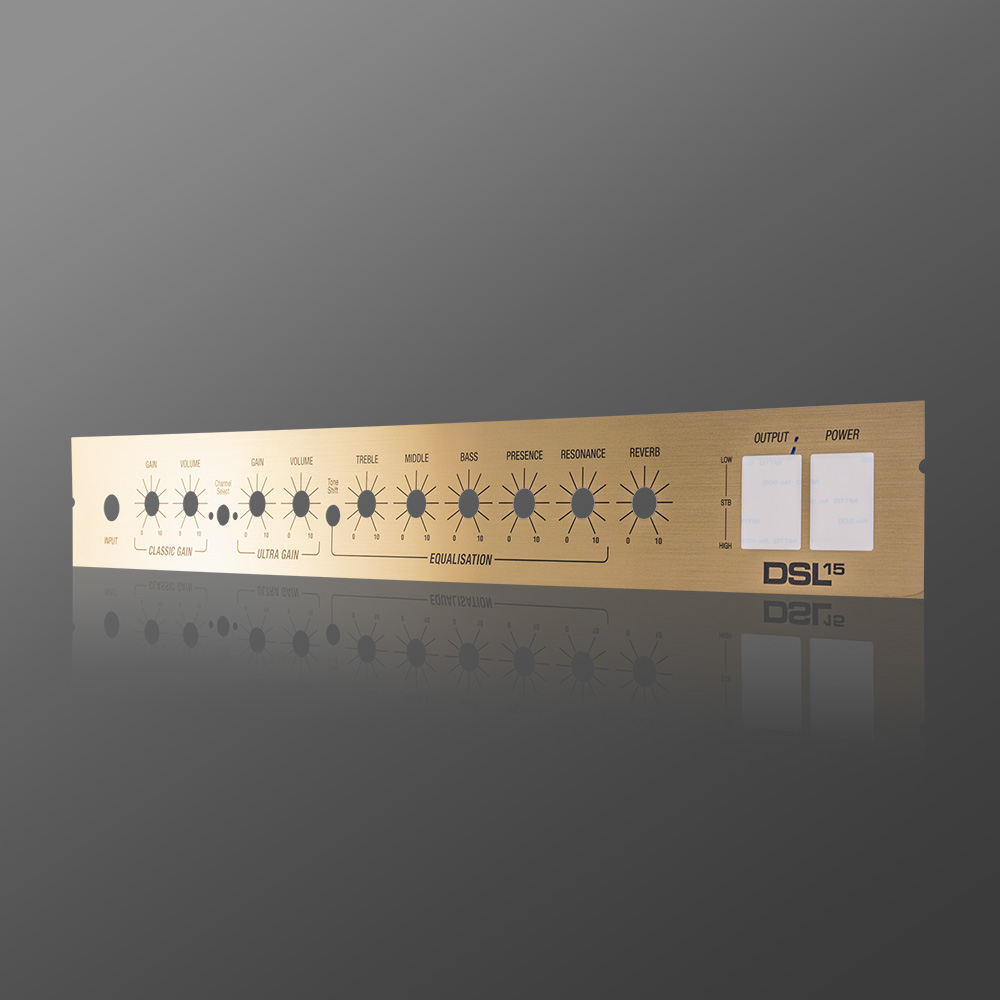
Surface scratches on custom graphic overlays are not always a sign that the wrong material was selected. A panel can meet its material and printing requirements and still pick up marks while being printed, cut, moved, or installed.
Reducing this risk calls for a suitable front-surface finish, appropriate temporary protection, and handling that matches the actual process. The aim is not to add a protective layer at every stage, but to prevent avoidable contact with visually important surfaces.
A scratch usually involves physical damage to the exposed surface. A scuff or rub mark may appear as a hazy streak or a change in sheen, even when it is less pronounced than a visible groove. Both can affect the appearance of a finished equipment panel.
Marks can occur when sheets slide across a work surface, parts touch one another during stacking, or hard particles become trapped between a panel and a fixture. Cutting, printing, packing, and final assembly may each introduce contact points. If temporary masking is present, an exposed face can be especially vulnerable when the film is removed before that surface needs to be handled.
A defect's visibility also depends on the finish, lighting, and surrounding graphics. A faint line on a clear or glossy area may become noticeable under directional light, while rubbing on a textured area can change its appearance.
Rather than assuming all marks are material defects, it is useful to identify where the surface was exposed and what it contacted. This directs attention to the handling conditions most likely to create damage.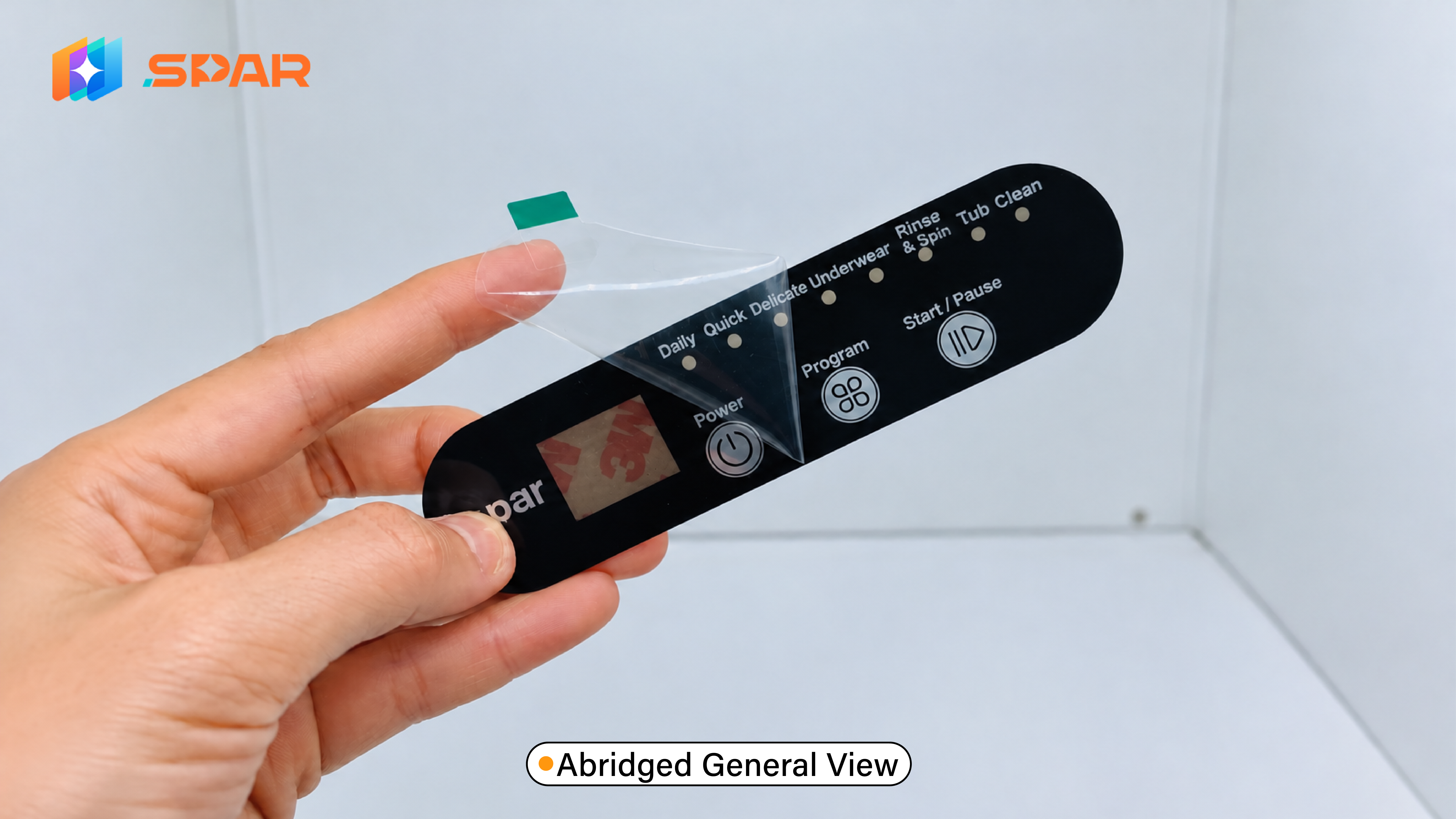
Glossy finishes reflect light more directly, so small scratches may be easier to see under certain viewing conditions. Matte or textured surfaces scatter reflections and may make some fine marks less obvious. However, a matte appearance does not automatically mean better scratch resistance. Repeated rubbing may also change the sheen of a textured surface.
Scratch resistance depends on the specific polycarbonate (PC) or polyester (PET) film grade and any surface treatment applied to it. Some films use hard coatings to improve resistance to abrasion or scratching. Their performance should be assessed using the supplier's stated test conditions and, where relevant, representative samples. No single hardness or abrasion figure should be treated as valid for every PC or PET overlay.
The correct surface is therefore a balance of visual appearance, expected handling, cleaning requirements, and material compatibility with printing and conversion. A finish that hides a slight mark under one light source may still be unsuitable for equipment that is frequently wiped or rubbed.
Temporary protective film, sometimes called surface masking, is a removable layer used to shield a selected face of a plastic sheet or overlay during appropriate processing, storage, shipping, or installation. It should not be confused with the adhesive release liner on the mounting side of a self-adhesive graphic overlay; the two serve different purposes.
Some materials arrive with masking on one face, while others have it on both. This difference matters because the visually exposed face and the face intended for printing may not be the same. On a reverse-printed overlay, for example, graphics are printed on the rear, while the front may require protection from contact.
Keeping suitable masking in place can reduce direct rubbing and incidental surface contact. But keeping it on for as long as possible is not a universal rule. A film may need to be removed to allow a particular printing, coating, or bonding step, and masking materials can have limits relating to process conditions or removal. The supplier's material guidance and the actual production sequence should determine when protection is applied or removed.
When a face must remain exposed, clean contact surfaces, careful movement, and appropriate separation between parts can also reduce the chance of marks. Protective film is a temporary barrier, not a guarantee that the underlying overlay cannot be scratched.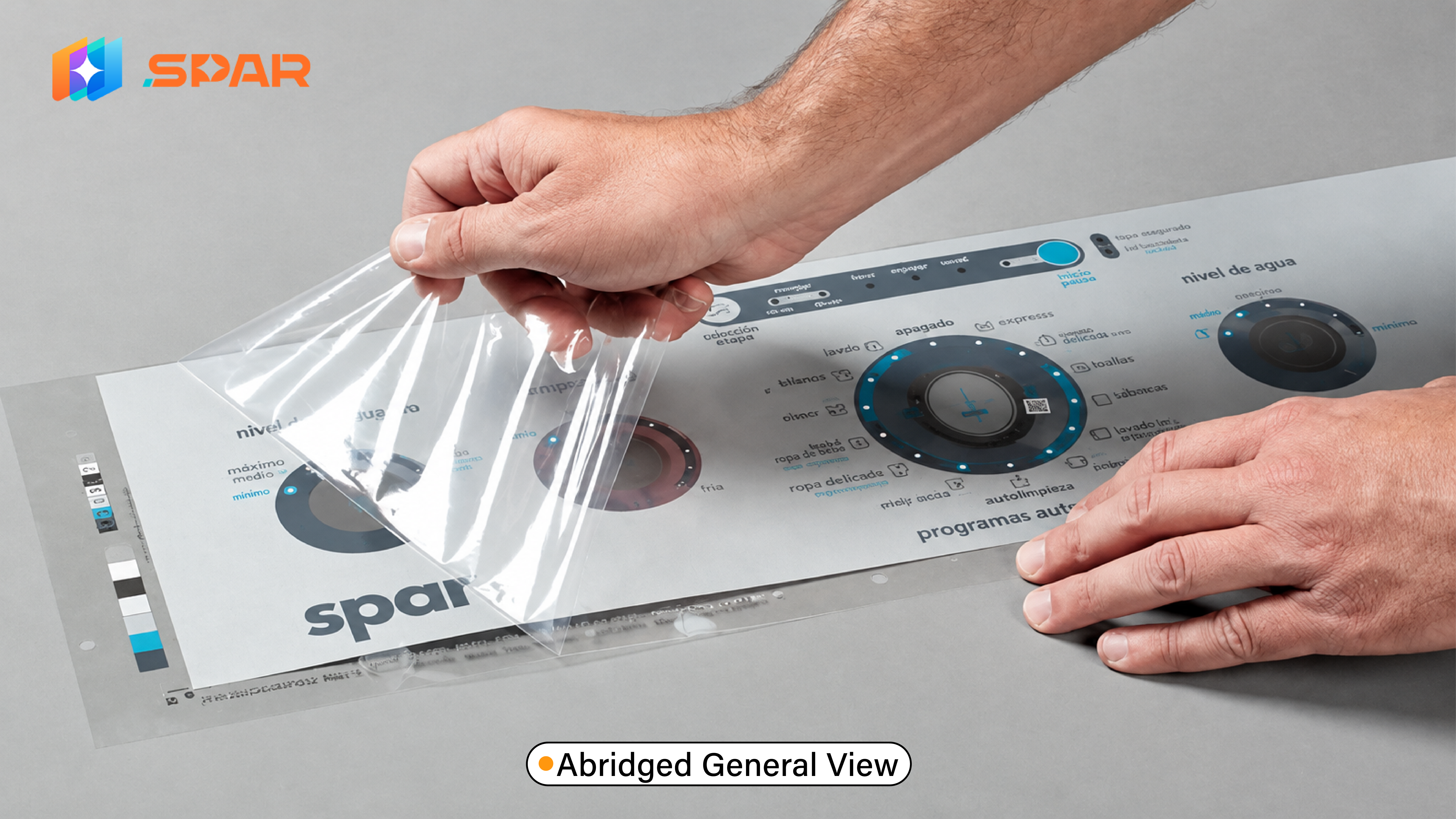
PE- and PET-based protective films are available in different thicknesses and adhesive configurations. Even films with similar nominal thicknesses may have different peel-adhesion characteristics.
When selecting a temporary surface protective film for a graphic overlay, the following factors should be considered.
|
Property |
What to Check |
Why It Matters |
|
Film Material |
PE or PET-based protective film |
Identifies the film construction for further evaluation |
|
Film Thickness |
Nominal thickness, tolerance, and whether adhesive thickness is included |
Helps assess compatibility with handling and processing |
|
Peel Adhesion |
Adhesion value, test surface, peel angle, and test conditions |
Helps evaluate the film's removal behavior |
|
Surface Compatibility |
Compatibility with glossy, matte, textured, or coated surfaces |
Helps assess adhesion and removal on the actual overlay |
|
Clean Removal |
Adhesive residue and surface condition after removal |
Helps reduce unwanted marks or residue on the finished panel |
A higher peel-adhesion value does not automatically indicate better surface protection. Similarly, a thicker protective film does not guarantee greater scratch resistance.
The appropriate film should be selected according to the surface finish, processing requirements, and intended removal conditions. Where appearance requirements are critical, compatibility should be checked on representative material samples.
For a custom overlay, surface appearance is a design requirement, not just a cosmetic detail checked at the end. Buyers and engineers should identify which side will be visible after assembly and whether it needs a glossy, matte, textured, or specially coated finish.
The application also matters. Will operators touch the panel frequently? Will it be wiped with cleaning agents? Does it contain a transparent display window where marks would be particularly noticeable? These details help determine whether a standard surface is appropriate or a different film or finish should be evaluated.
It is also worth agreeing on the expected condition of the part at delivery: whether temporary masking is required, how it will be removed during assembly, and what an approved sample should look like under relevant viewing conditions. Clear expectations help avoid disagreements over marks that are visible only at certain angles or under specific lighting.
For custom PC and PET graphic overlays, Spar Panel can review the artwork, material, surface finish, and application requirements to discuss suitable processing and protection options. Final decisions should reflect the project rather than a single rule applied to every overlay.
Not necessarily. Matte texture can change the visibility of scratches, but actual resistance depends on the material grade, surface treatment, and test conditions. Supplier data and representative samples are more useful than gloss level alone.
Not always. Masking can protect an exposed surface during compatible steps, but printing, bonding, or other operations may require it to be removed. The correct approach depends on the material, masking type, and production sequence.