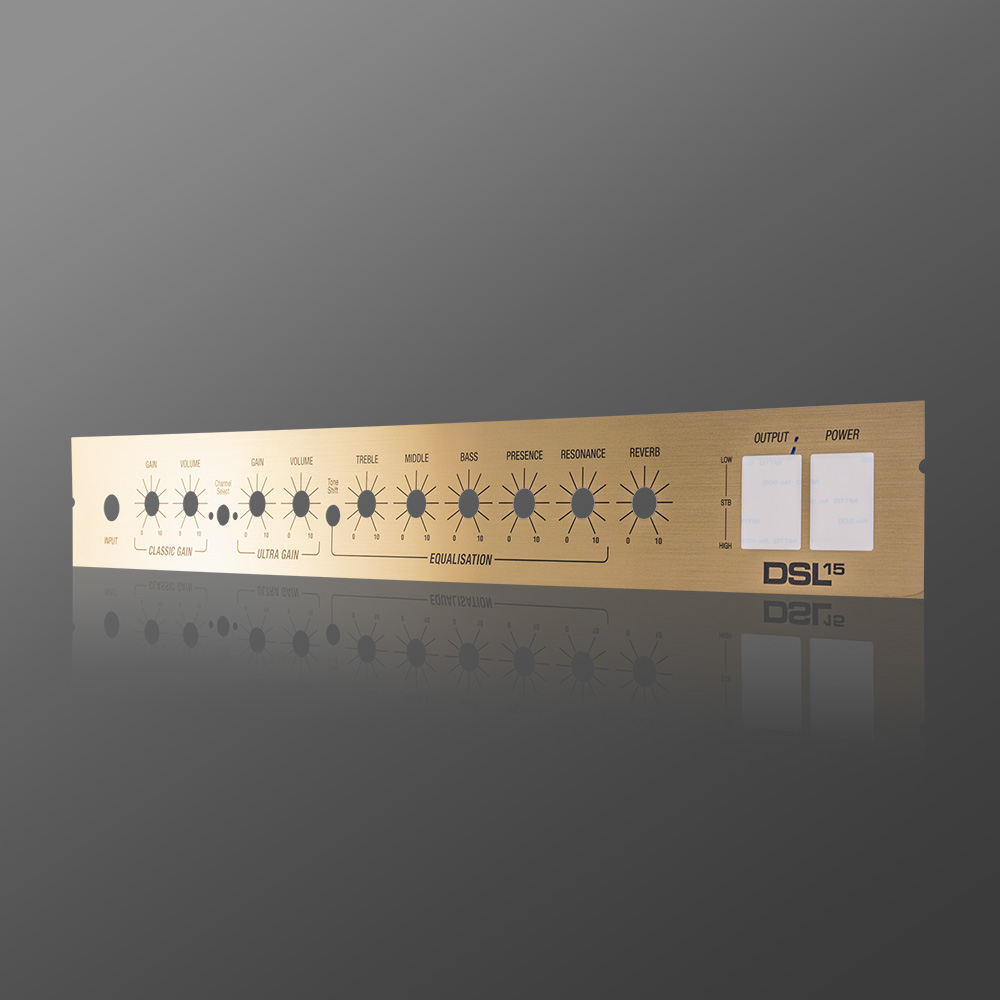
An infrared-transmitting plastic window allows an electronic device to receive or transmit infrared signals while protecting internal components and maintaining a consistent exterior appearance.
These windows are commonly used in air conditioners, televisions, audio equipment, remote-controlled devices, and certain sensing applications. Depending on the design, the window may appear completely transparent or dark enough to conceal the components behind it.
Choosing the right window requires more than selecting a clear plastic sheet. Engineers need to consider the operating wavelength, material type, thickness, printing, and the actual position of the infrared sensor.
This guide explains how these factors influence infrared transmission and provides reference data for clear acrylic (PMMA) and polycarbonate (PC) materials.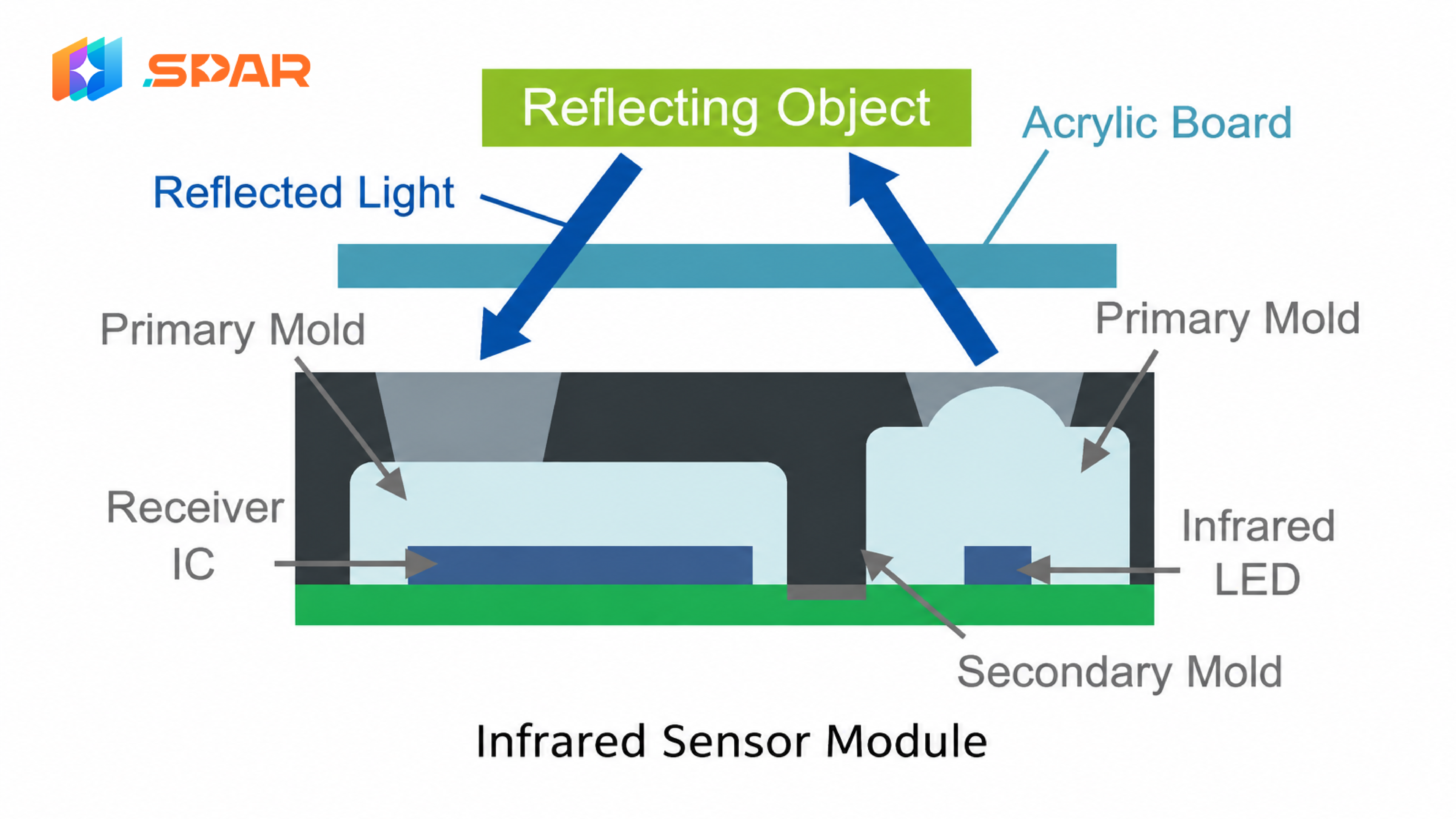
An infrared window serves two main purposes: it protects the device's internal components and allows sufficient infrared energy to pass through for the intended function.
Many electronic remote-control systems operate with near-infrared light around 940 nm. Other sensing systems may use 850 nm or different wavelengths, depending on their emitter and receiver specifications.
An important distinction is that infrared wavelength and signal modulation frequency are not the same.
For example, a remote-control receiver may operate with approximately 940 nm infrared light and a 38 kHz modulation frequency. The optical transmission of the plastic window must be evaluated at the relevant wavelength, not at the modulation frequency.
The window's appearance is another consideration. A clear material may transmit both visible and near-infrared light, while a specially formulated dark material can conceal internal components and still transmit selected infrared wavelengths.
Consequently, a material's visible appearance alone cannot establish its infrared performance.
Acrylic (PMMA) and polycarbonate (PC) are commonly considered for electronic display and sensor windows.
Clear PMMA generally provides high optical clarity, while PC is often selected where impact resistance and mechanical durability are important. Both materials can transmit substantial near-infrared light, although their spectral characteristics depend on the specific formulation.
Thickness also affects transmission. In wavelength regions where a material absorbs little light, increasing thickness may produce only a small change in transmission. In regions where absorption is stronger, thicker material can reduce transmission more significantly.
Reference Near-Infrared Transmission of Clear PMMA and PC
The following table summarizes approximate transmission levels near 940 nm for clear, unprinted, and uncoated plastic materials.
|
Sheet Thickness |
Clear PMMA |
Clear PC |
|
1 mm |
Approx. 90–92%* |
Approx. 90% |
|
2 mm |
Approx. 90–92% |
Approx. 90% |
|
3 mm |
Approx. 90–92% |
Approx. 88–90% |
Important data notes:
These are indicative ranges summarized from selected published measurements, not standardized averages or guaranteed material specifications.
The 1 mm PMMA range is an estimate based on published near-infrared behavior of thicker clear PMMA samples; it is not a directly verified 1 mm test result.
The PMMA references and PC measurements come from different samples and test conditions. The rows must not be interpreted as a controlled thickness experiment using one identical material grade.
PC values are informed partly by published experimental polycarbonate compositions. Other commercial PC grades may perform differently.
These figures describe clear substrates only. Printing, pigmentation, coatings, and assembly conditions may change finished-window transmission.
Published data from ACRYLITE show approximately 90% transmission for a 3 mm clear PMMA sheet in the 700–1400 nm region. Other laboratory measurements also demonstrate high near-infrared transmission in clear PMMA and selected PC compositions.
For infrared receiver windows operating near 940 nm, the reference data suggest that both transparent materials may be suitable starting points.
However, material thickness should not be selected solely according to the small differences shown in this table. Structural support, impact requirements, optical design, and the actual spectral performance of the selected grade also matter.
The same reference values should not be applied to longer-wave thermal infrared systems, where ordinary PMMA and PC may have substantially different transmission characteristics.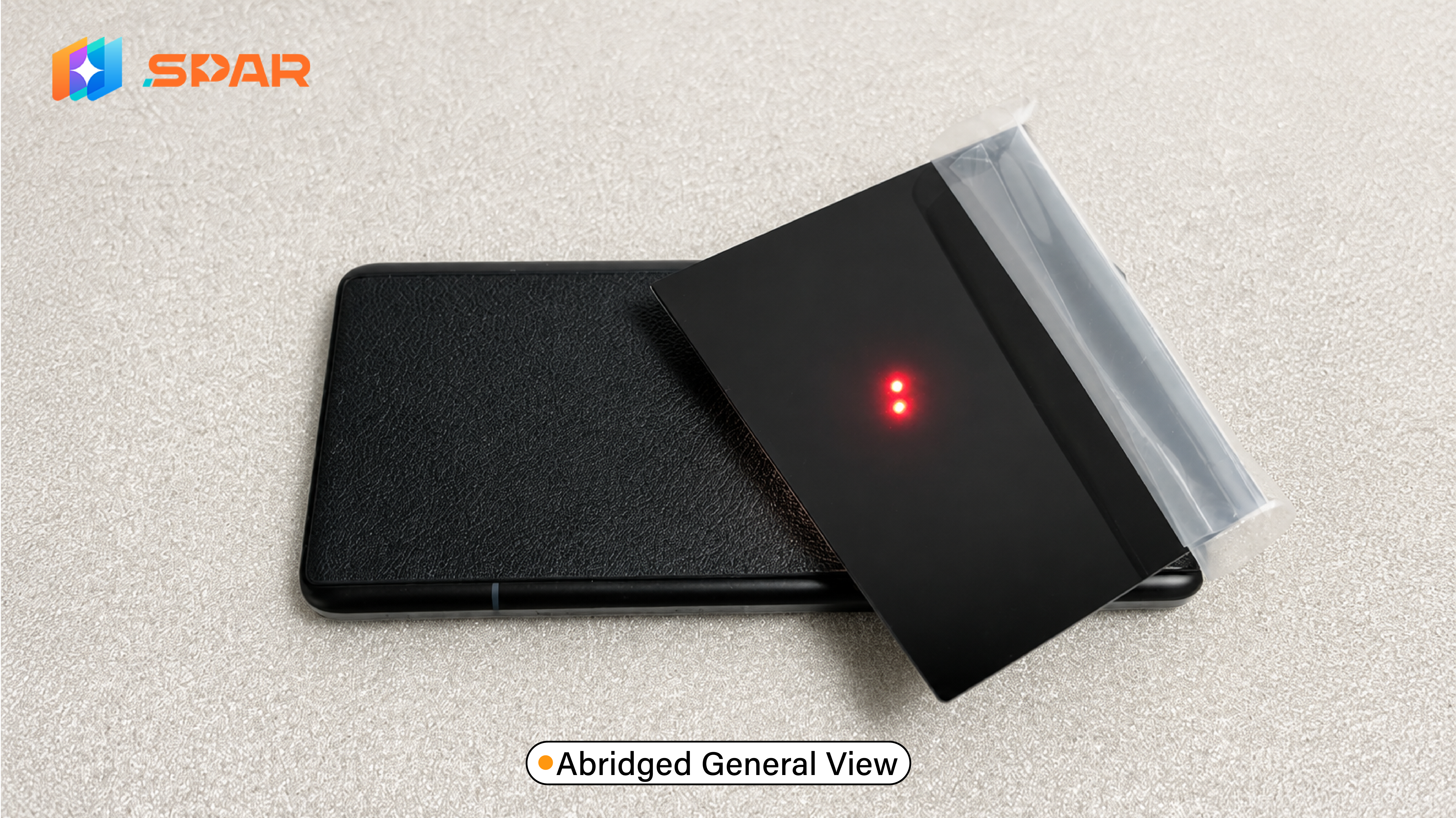
Yes, but the result depends on how the black appearance is produced.
Some specially formulated black plastics and infrared-transmitting inks are designed to reduce visible-light transmission while allowing selected near-infrared wavelengths to pass through.
This makes it possible to conceal a receiver or sensor behind a dark-looking equipment panel without necessarily blocking its intended infrared signal.
However, there is an important difference between a dark infrared-transmitting material and an ordinary black printed layer.
Standard opaque black printing is often used to conceal internal structures, create decorative borders, and reduce unwanted visible light. Its infrared transmission cannot be assumed from its appearance or visible-light opacity.
Specialized infrared-transmitting black inks are formulated for different optical behavior. Their performance depends on the ink composition, printed layer thickness, number of layers, and processing conditions.
For a custom plastic panel with a concealed infrared receiver, engineers should therefore evaluate the complete window structure rather than relying only on the transmission of the transparent base sheet.
The selected substrate, printing system, and any surface coatings may all contribute to the final optical result.
Before developing a custom infrared-transmitting window, OEM engineers should define the required optical function and the conditions under which the window will operate.
The following checklist summarizes the principal design and manufacturing considerations.
IR Window Design and Material Selection Checklist
|
Design Factor |
What to Specify |
Why It Matters |
|
IR Wavelength |
850 nm, 940 nm, or the device's specified operating wavelength |
The window must provide sufficient transmission at the wavelength used by the device. |
|
Material Grade |
Specific PMMA, PC, or PET grade |
Optical transmission characteristics vary between material grades and formulations. |
|
Window Thickness |
Actual finished thickness |
Thickness can affect optical transmission, rigidity, and assembly compatibility. |
|
Visible Appearance |
Clear, tinted, or visually concealed |
Visible color and transparency do not reliably indicate infrared transmission performance. |
|
Printing and Coatings |
Ink type, printed layer coverage, surface treatment, and layer arrangement |
Printing and coating layers may alter the optical performance of the finished window. |
|
Assembly Conditions |
Sensor position, operating angle, and spacing between the sensor and window |
The assembled optical path can affect sensor performance and signal reception. |
|
Performance Verification |
Material spectral data and representative assembly testing |
Published material properties should be checked against the requirements of the finished device. |
For example, an air conditioner using a remote-control receiver with peak sensitivity around 940 nm may be able to use a transparent PMMA or PC viewing window with high transmission at that wavelength.
However, a dark printed design introduces additional optical variables. The finished window may need to be evaluated under actual operating conditions to determine whether the receiver maintains the required performance.
A material data sheet is an important reference, but it does not replace verification of the complete device assembly.
Spar Panel manufactures custom plastic display windows, front panels, and functional panels using acrylic, polycarbonate, and PET materials.
For infrared window applications, the manufacturing evaluation can consider the customer's drawing, required material thickness, visible appearance, printing layout, surface finish, and assembly requirements.
Where a project requires specific infrared transmission performance, the relevant material or ink data and verification requirements should be established before finalizing the production specification.
Representative samples can help evaluate the physical appearance, fit, and functional compatibility of the proposed window design.
Choosing an infrared-transmitting plastic window involves matching the device's optical requirements with the material and finished-window structure.
Clear PMMA and PC can offer high near-infrared transmission around common remote-control wavelengths, but transmission depends on wavelength, material formulation, and thickness.
Dark printing and surface treatments introduce additional variables that cannot be evaluated from clear-sheet data alone.
For OEM projects, the most reliable approach is to define the operating wavelength, review available optical data, and confirm the proposed window design under representative assembly conditions.
Clear PMMA and PC can transmit substantial near-infrared light around common remote-control wavelengths such as 940 nm. However, the actual transmission depends on the material grade, thickness, and any additional layers. Functional compatibility should be checked with the intended receiver.
Not necessarily to the same extent at every wavelength. Thickness has a greater effect where the material has stronger optical absorption. Around 940 nm, some transparent PMMA and PC samples show relatively small transmission differences across common sheet thicknesses.
It may be possible when the window uses an appropriate infrared-transmitting material or ink system. Conventional black printing should not be assumed to provide the same optical performance. The finished printed structure should be evaluated at the required wavelength.
ACRYLITE — Infrared Radiation and Transmission
Hitachi High-Tech — Measurement of Optical Characteristic of Plastic by UH4150 Spectrophotometer
Sensors — Published Acrylic Transmission Measurement at 940 nm