Acrylic front panels are widely used on equipment because they combine a lower weight than tempered glass with clear visual presentation and flexible printing possibilities.
Custom acrylic front panels can form part of the equipment exterior while also carrying operating information, control markings, display areas, and decorative graphics.
These characteristics make acrylic suitable for visible interface components where manufacturers need both a defined panel structure and a coordinated product appearance.
One reason acrylic is widely used for equipment front panels is its lower weight compared with Tempered glass.
For panels of similar size and thickness, a lower-weight front component can simplify handling during assembly and reduce the load placed on the surrounding housing and mounting structure.
This can be especially useful for larger front panels, display covers, and other visible equipment components where panel weight becomes part of the overall structural design.
Acrylic can also provide a smooth, transparent, or tinted front surface depending on the project requirements.
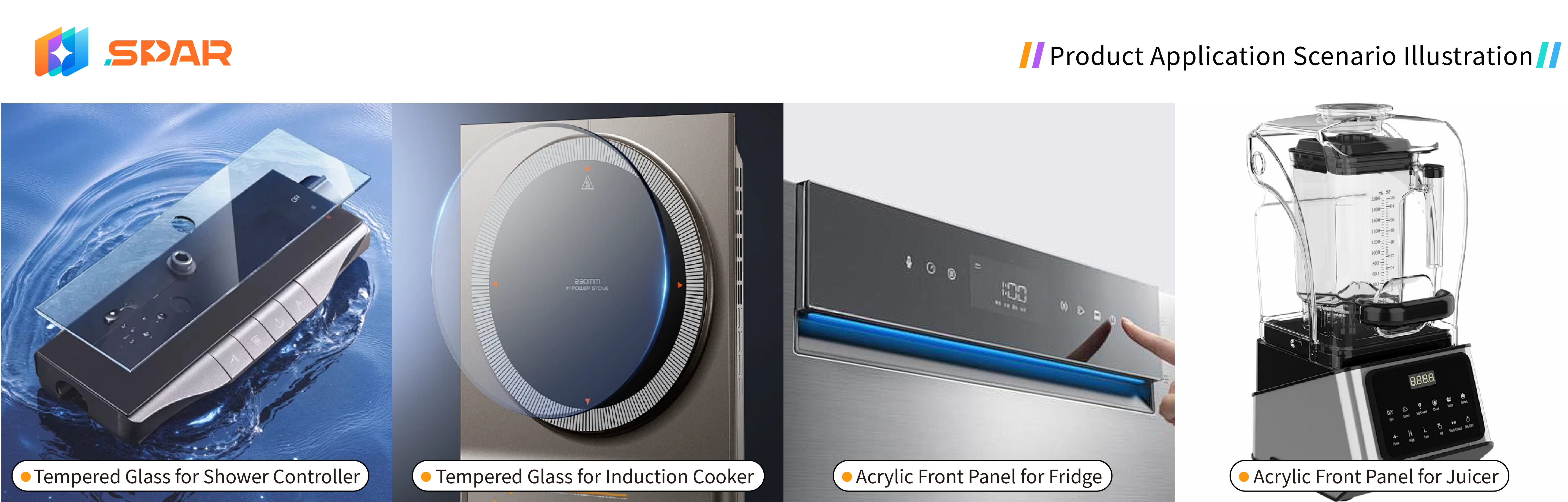
Printing changes an acrylic sheet from a simple transparent component into part of the product interface.
Text, symbols, operating instructions, control markings, logos, model information, and decorative graphics can be added according to the customer’s artwork. Color blocks may separate different operating areas, while printed borders can define displays, buttons, indicators, and other interface components.
This combination is particularly useful for acrylic control panels, where users need to identify functions and operating areas clearly. On acrylic display panels, printed graphics can frame the visible screen area and help it coordinate with the surrounding equipment surface.
Transparent, tinted, and printed areas may also be combined within one panel. For example, a display window can remain clear while the surrounding area carries a solid background color, control symbols, or decorative patterns. This allows the display and exterior design to appear as one coordinated surface.
Reverse printing may be considered when the artwork needs to remain visible through the front of the acrylic. With the printed layer positioned behind the material, the outer surface separates the graphics from direct contact during normal handling. The exact printing structure depends on the artwork, background color, transparent areas, and intended appearance.
Through printing, a custom acrylic panel can support two purposes at the same time:
These characteristics make acrylic front panels suitable for equipment interfaces that require a lower-weight front surface together with printed operating and decorative graphics.
FAQ
Q1: Can acrylic front panels include display windows?
Yes. Clear, tinted, or printed window areas can be included according to the display position and visual requirements.
Q2: Can operating symbols and logos be printed on acrylic?
Yes. Acrylic panels can carry text, symbols, color areas, logos, and decorative graphics based on the customer’s artwork.
Q3: Can acrylic front panels combine printed and transparent areas?
Yes. Transparent display windows can be combined with printed backgrounds, symbols, borders, and decorative graphics according to the panel artwork.
Thank you for reading. To discuss a custom acrylic front panel, please contact Spar Panel with your drawing or product requirements.


