Printed graphics on a graphic overlay can be placed on the front surface of the material or printed on the reverse side of a transparent substrate. These two approaches are commonly described as front printing and reverse printing.
The main difference is the position of the ink. With front printing, the printed layer remains on the outward-facing surface. With reverse printing, the graphics are printed on the back of a transparent material and viewed through the material from the front.
This difference affects the surface feel, the way the printed layer is exposed during use, and how the graphics can be combined with the rest of the panel structure.
In front printing, text, symbols, logos, color blocks, and other graphics are applied directly to the outer surface of the material.
Because the ink remains exposed on the finished surface, it can be contacted directly during handling. Depending on the ink and printing process, the printed area may also have a noticeable surface texture when touched.
Reverse printing places the graphics on the back side of a transparent substrate such as polycarbonate, PET, or acrylic. The finished graphics are then viewed through the material from the front.
This arrangement is also commonly referred to as second-surface printing in transparent panel and overlay applications.
The transparent substrate becomes part of the viewing structure, separating the front surface from the printed layer behind it.
Reverse printing requires the artwork to be prepared according to the final viewing direction.
Text, logos, symbols, and other directional graphics are printed on the reverse side so that they appear correctly when viewed through the front of the material.
The printed design can include more than text or logos. Transparent windows, solid color areas, borders, symbols, and other graphic zones can be arranged within the same panel according to the artwork.
For example, a display window may remain clear while surrounding operating information and decorative graphics are printed on the reverse side.
Multiple colors and background areas can also be built into the design. The exact printing sequence depends on the artwork and required panel structure, so reverse printing does not follow one fixed layer arrangement for every project.
The position of the ink changes how the printed layer interacts with the surface of the panel.
With front printing, the ink itself forms part of the outward-facing surface. This makes the printed layer directly accessible to fingers, cleaning actions, and other physical contact during use.
With reverse printing, the printed layer sits behind the transparent viewing surface. Routine front-side contact therefore reaches the substrate before it reaches the ink.
This can reduce direct contact with the printed graphics compared with front printing. However, reverse printing alone should not be treated as a guarantee of abrasion resistance, color retention, or other finished-product performance.
Those characteristics still depend on the material, ink system, curing process, panel construction, and application conditions.
The important distinction is structural: reverse printing changes where the ink is positioned within the finished part.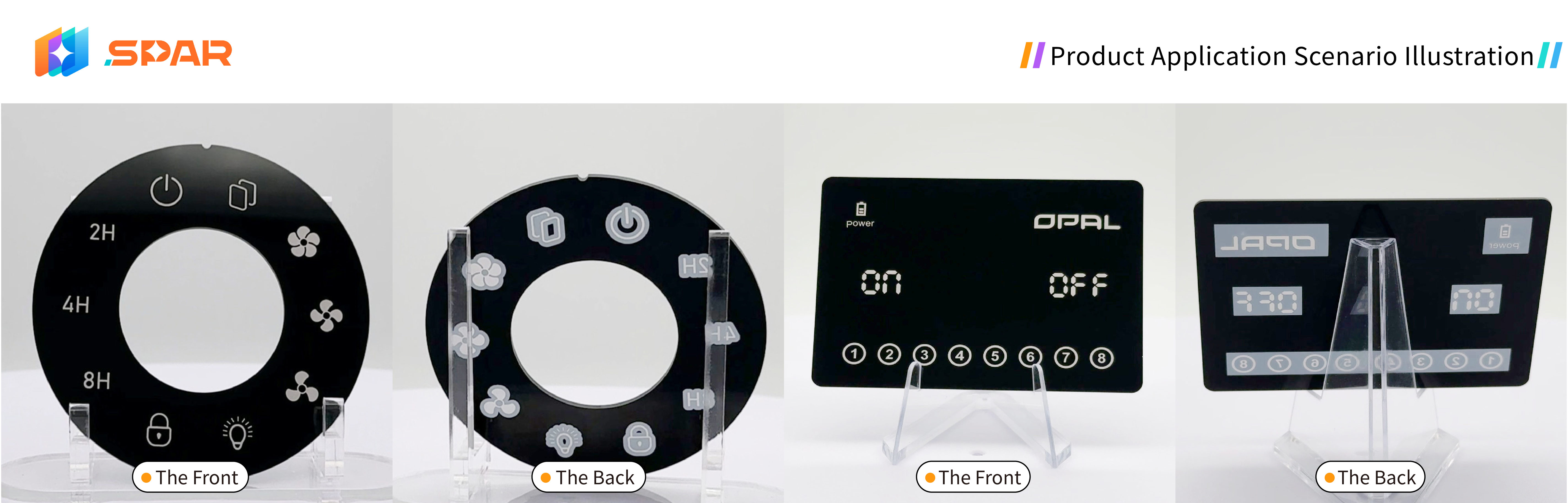
Reverse printing can be combined with lamination, but the two terms describe different manufacturing steps.
Reverse printing defines where the graphics are printed.
Lamination defines how different material layers are bonded together afterward.
In some panel constructions, a reverse-printed PET film may be combined with another substrate. Depending on the project requirements, adhesive can be used between the layers to form a laminated structure.
For some Spar Panel projects, UV-curable adhesive can be used to bond a reverse-printed PET film to another substrate according to the required panel construction.
In this type of structure, the printed layer may become enclosed within the laminated assembly rather than remaining exposed on an outer surface.
This is only one possible construction. Not every reverse-printed graphic overlay includes an additional PET layer or UV adhesive lamination.
For that reason, reverse printing should be understood as a printing arrangement rather than as a fixed multilayer structure.
Front printing and reverse printing suit different panel requirements.
Front printing may be appropriate when the design calls for graphics directly on the outer surface or when the resulting printed surface appearance and feel match the intended product design.
Reverse printing may be preferred when a transparent substrate is used and the graphics need to be viewed through the material. It can also work well with designs that combine printed areas and transparent viewing zones within the same panel.
The choice may also be influenced by whether the project requires additional laminated layers or other structural features.
Rather than selecting a printing direction in isolation, the complete panel should be considered. Material, artwork, transparent areas, surface appearance, assembly structure, and the intended use of the finished part all contribute to the final decision.
At Spar Panel, front printing and reverse printing can be reviewed according to customer artwork, panel drawings, material requirements, and project structure.
Clear artwork and drawings help define the required printing arrangement before production.
The project information should identify the panel material, finished dimensions, front viewing side, printed areas, transparent windows, and the required printing direction.
Where additional laminated layers are part of the design, the layer structure should also be identified so that the printing and assembly method can be reviewed together.
Reverse-printed artwork should always be checked from the intended viewing side to confirm that text, symbols, logos, and other directional graphics appear correctly through the transparent material.
Sample confirmation then provides a practical stage for reviewing the finished appearance and overall panel structure before volume production.
A: In graphic overlay and transparent panel applications, the terms generally describe the same basic arrangement: the graphics are printed on the back side of a transparent material and viewed through the material from the front.
Q2: Does reverse printing always protect the printed graphics?
A: Not automatically. Positioning the ink behind the front viewing surface reduces direct front-side contact with the printed layer, but the final level of protection depends on the complete material, ink, and panel construction.
A: Yes. Depending on the required panel structure, reverse-printed PET can be combined with another substrate through a suitable lamination process. For some Spar Panel projects, UV-curable adhesive can be used as part of this construction.
Q4: Is reverse printing always better than front printing?
A: No. The two methods create different surface and structural characteristics. The appropriate choice depends on the material, artwork, surface requirements, transparent areas, panel construction, and intended application.
Front printing and reverse printing mainly differ in where the ink is positioned within the finished panel.
Front printing places graphics directly on the outer surface, while reverse printing places them behind a transparent viewing surface. This change in ink position affects the surface feel, exposure of the printed layer, and the way graphics can be integrated into the overall panel structure.
Reverse printing can also be combined with laminated constructions when required, but lamination is a separate process rather than a defining feature of reverse printing.
For custom graphic overlays and printed panels, Spar Panel can review the printing direction, artwork, material, transparent areas, and panel structure according to the requirements of the project.


