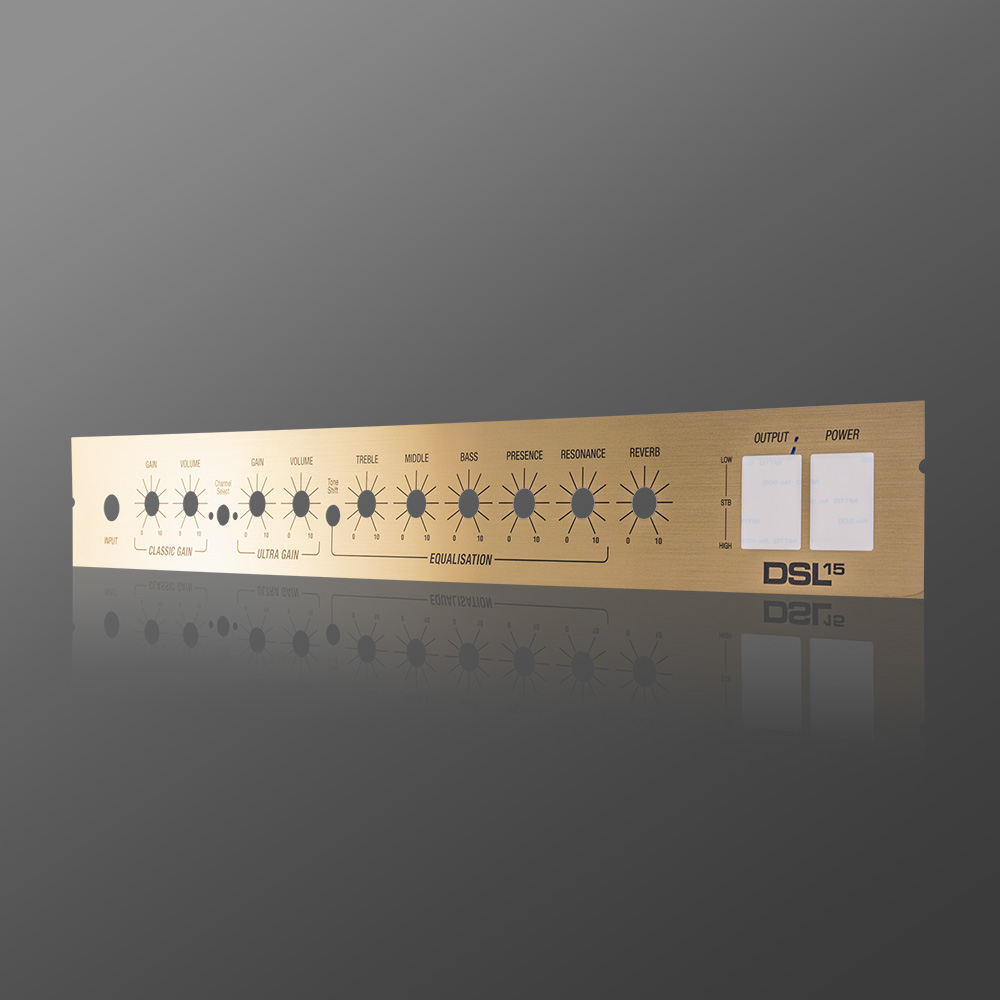
Polycarbonate labels can be used on many equipment surfaces that are not completely flat, but a curved housing changes the way the label needs to behave during installation.
On a flat surface, the label and adhesive can make contact without requiring much bending. On a curved surface, the polycarbonate material must remain bent while the adhesive keeps the label in close contact with the housing.
Whether this works well depends on several factors, including label thickness, label dimensions, the degree of curvature, adhesive selection, housing material, cutouts, and installation conditions.
For this reason, a polycarbonate label for a curved surface should be evaluated as a complete mounting structure rather than by material choice alone.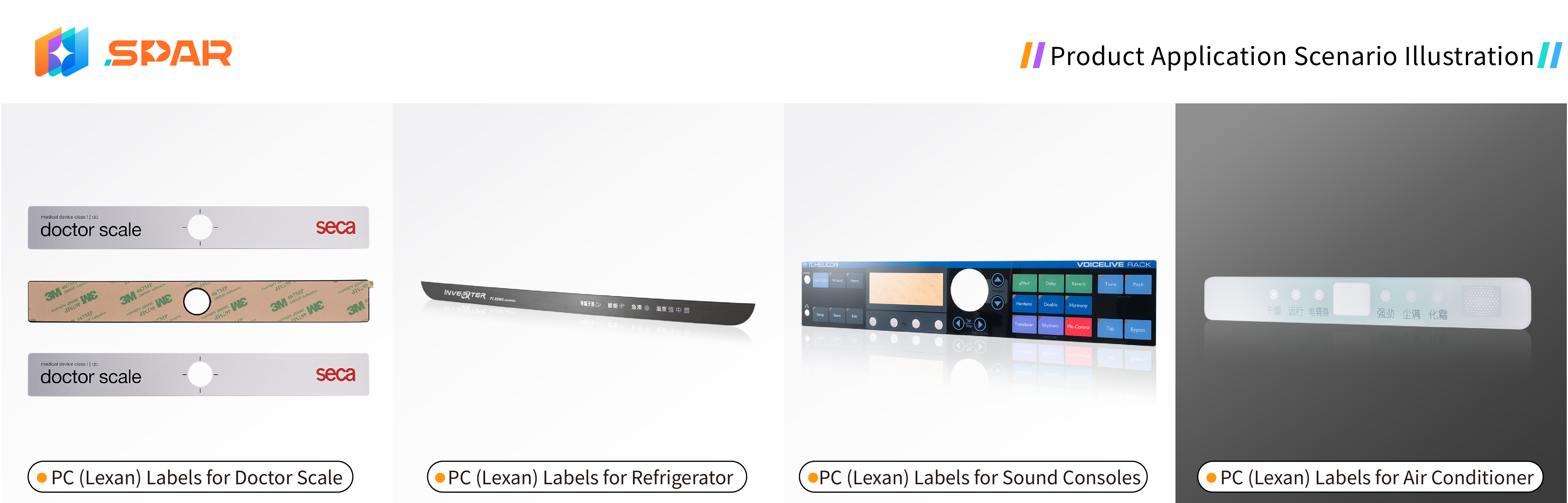
A flat mounting surface allows most of the label to remain in its natural shape after installation.
A curved housing requires the label to conform to a different geometry. Depending on the label construction, the material may tend to return toward its original flat form. This can place more demand on the adhesive layer, especially near the edges of the label.
The amount of bending also changes according to the housing shape. A gentle curve across a large enclosure is different from a small-radius curved area or a surface where the curvature changes suddenly.
This means that simply specifying "polycarbonate label" does not confirm whether the structure will work on every curved surface.
A curved housing requires the label material and adhesive to maintain close contact while the label remains in a bent condition.
Polycarbonate labels can be produced in different thicknesses according to the product structure and project requirements.
Thickness influences how easily the label bends during installation. A thinner polycarbonate film generally requires less force to follow a curved mounting surface, while a thicker construction can be more resistant to bending.
However, this does not mean that the thinnest material is automatically the best option.
Thickness also affects handling, stiffness, appearance, printing structure, openings, and the overall feel of the finished label. The correct choice therefore depends on the complete product design.
When the mounting surface is curved, material thickness should be reviewed together with the size of the label and the actual housing geometry rather than being selected as an isolated specification.
The dimensions of the label can change how strongly a curved surface affects the installation.
A small identification label may cover only a limited portion of a curved housing and require relatively little bending. A larger control or equipment label can extend across a much wider section of the same surface and may need to follow more of the housing geometry.
For this reason, two labels made from the same polycarbonate material may behave differently even when they are installed on the same equipment.
Curvature should be evaluated together with label dimensions rather than as a property of the housing alone.
The position of the label also matters. A part located on a relatively uniform curve may behave differently from one that crosses a change in surface angle or another transition in the housing.
Adhesive backing forms the mounting layer between the polycarbonate label and the equipment housing.
On a curved surface, the adhesive needs to maintain contact while the label is being held in a bent position. If the adhesive does not make sufficient contact with the housing, some areas may be more likely to separate from the mounting surface.
Adhesive selection should consider the actual housing rather than simply choosing the strongest or thickest option.
Important factors include:
A smooth metal housing, a textured painted surface, and a plastic enclosure can require different adhesive considerations.
At Spar Panel, adhesive backing can be applied according to the label structure and project requirements, including die-cut adhesive layouts that follow the outer profile, windows, holes, and other openings.
The edges of a label are often important areas to inspect when the product is installed on a curved surface.
If the polycarbonate material tends to return toward a flatter shape, the edge can experience more lifting force than the central area. The final result also depends on adhesive contact, housing texture, surface cleanliness, and the position of the label on the curve.
Edge lifting is therefore not caused by one factor alone.
Design details can also influence edge behavior. For example, a label edge positioned close to a sharp change in housing geometry may behave differently from one placed on a smooth, continuous curve.
During design review, it is useful to check whether:
These factors can be reviewed before the final production structure is confirmed.
Polycarbonate equipment labels may include display windows, button openings, connector cutouts, indicator areas, or irregular outer profiles.
These features remove material from the label and can change how the part bends during installation.
A large opening, a narrow section between two cutouts, or an irregular outline may behave differently on a curved surface compared with a simple rectangular label.
This does not mean that cutouts should be avoided. They should simply be reviewed together with the housing geometry.
Large openings, narrow connecting areas, and irregular profiles can affect how a label conforms, so the final geometry should be evaluated together with the mounting surface.
A flat sample placed on a table cannot fully confirm how the label will behave on the finished equipment.
Where possible, the sample should be installed on the actual housing or on a representative surface with similar material, texture, and curvature.
During sample review, the following points can be checked:
The purpose of sampling is to confirm whether the selected material, adhesive, geometry, and installation method work together before volume production.
For a custom polycarbonate label installed on a curved housing, a front-view label drawing alone may not provide enough information.
Useful project information can include:
When the mounting area is curved, a side-view drawing, 3D model, equipment drawing, or physical housing sample can also help show the actual surface geometry.
If the curvature is more complex, the structure should be reviewed during the engineering and sampling stage rather than assuming that a flat label construction will automatically conform.
For custom polycarbonate labels, Spar Panel can review customer drawings, artwork, adhesive requirements, and mounting structures before sampling.
Polycarbonate labels can be used on many curved surfaces, but suitability depends on the label thickness, dimensions, surface curvature, adhesive, housing material, and installation structure. The actual mounting condition should be reviewed before volume production.
Not necessarily. A thinner material may conform more easily, but thickness also affects handling, stiffness, printing structure, appearance, and other project requirements. The appropriate thickness should be selected according to the complete label design.
Reducing edge lifting starts with matching the complete label construction to the actual housing. The adhesive should be selected according to the housing material, surface texture, curvature, and operating conditions, while the adhesive layer should maintain continuous contact across the required bonding area.
The label geometry also matters. Edges should avoid abrupt changes in curvature where possible, and cutouts or narrow sections close to the outer profile should be reviewed carefully.
During production, uniform adhesive lamination and clean bonding surfaces help improve contact. For projects with noticeable curvature, the final construction should be confirmed by applying the sample to the actual or representative housing before volume production.
Polycarbonate labels can be used on curved equipment surfaces, but curvature should not be considered separately from the rest of the label structure.
Material thickness, label size, adhesive backing, housing material, cutouts, and mounting geometry all influence how the finished label conforms to the equipment.
For projects involving curved housings, evaluating a physical sample on the intended or representative mounting surface is one of the most useful ways to confirm the structure before volume production.
Spar Panel can manufacture custom polycarbonate labels according to customer drawings, artwork, adhesive specifications, cutout requirements, and equipment mounting structures.