Air conditioners, commercial refrigerators, freezers, ice makers, and beverage coolers typically require a control interface that users can read and operate at a glance. A graphic overlay is the custom-printed front layer that supports this function—it carries temperature markings, mode icons, button legends, and brand identity, turning a bare housing into a finished product.
Spar Panel has been producing custom graphic overlays for air conditioning and refrigeration equipment manufacturers for over 20 years. This article outlines the types of overlay products used in these applications, the functions they serve, and the manufacturing processes behind them.
Graphic overlays vary according to the equipment type, control layout, housing structure, and operating conditions. The following examples are grouped by structural configuration rather than material. A single overlay may combine several of these features and can be produced from PC or PET according to the customer’s design.
Flat printed overlays — panels with printed operating information, symbols, control markings, and branding. They are used where the interface mainly requires clear visual information without raised control areas.
Overlays with display windows — panels with transparent, tinted, or concealed windows for LED or LCD temperature readings, operating information, and status indicators. Concealed windows can blend into the surrounding panel when the display is off and reveal the information when illuminated.
Emboss overlays — panels with raised button areas aligned with the control structure beneath the overlay. These areas help users identify temperature, mode, fan speed, and other controls by sight and touch.
Overlays with double-sided adhesive backing — panels supplied with die-cut adhesive for attachment to plastic or metal housings. The adhesive structure is specified according to the housing material, surface condition, bonding area, and installation requirements.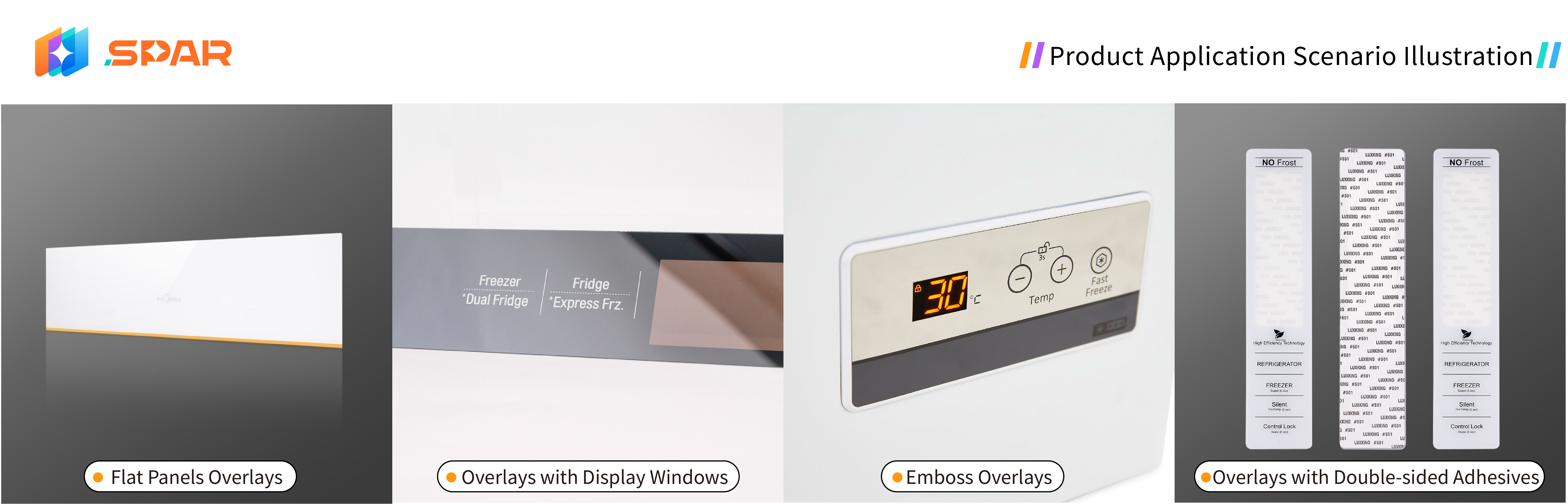
In air conditioning equipment, graphic overlays appear on wall-mounted units, portable air conditioners, air coolers, and ventilation control panels. These interfaces typically combine a temperature display with mode selectors, fan-speed controls, timer settings, and airflow-direction buttons arranged in a compact area.
In refrigeration equipment, overlays are used on commercial refrigerators and freezers, ice makers, beverage coolers, and wine cabinets. These panels often display temperature readings, defrost-cycle indicators, and alarm symbols so that staff or consumers can verify equipment conditions quickly.
Commercial refrigeration equipment may be cleaned frequently and can operate in humid environments. The substrate, ink system, surface finish, and adhesive should therefore be selected according to the expected cleaning method, equipment structure, and operating conditions.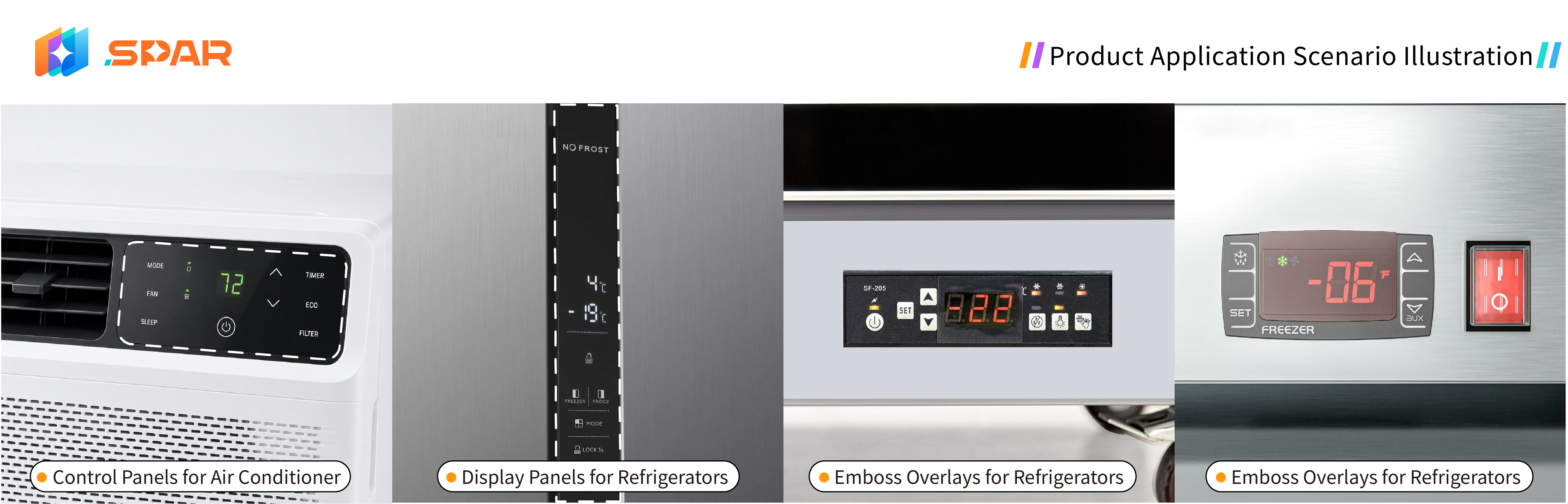
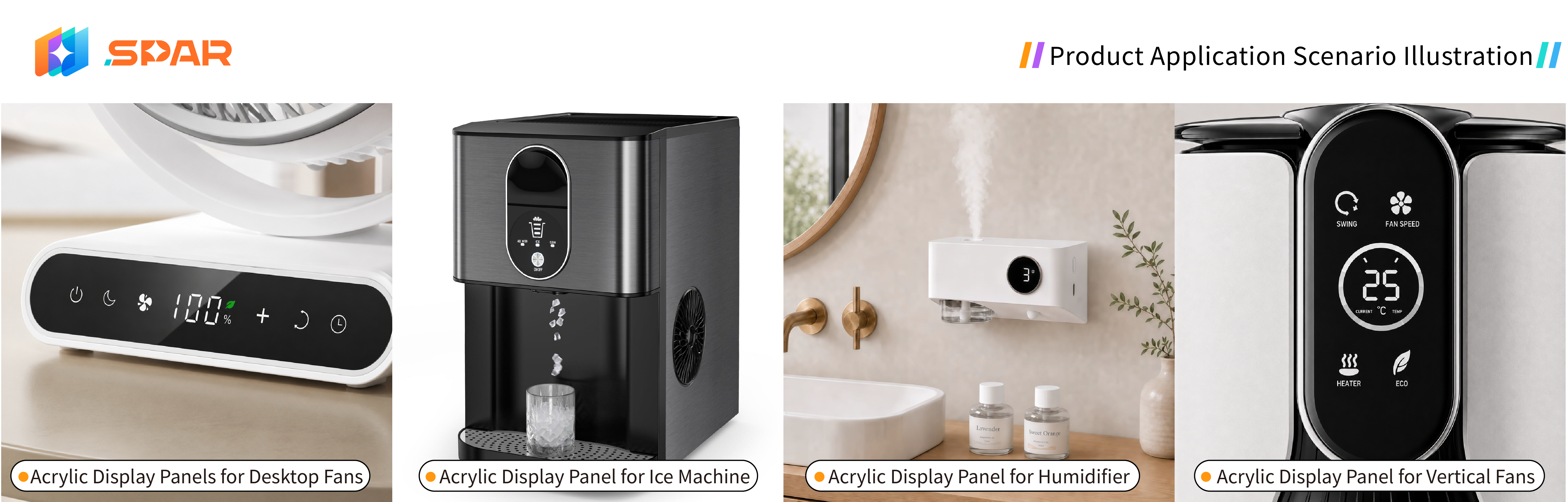
A well-designed graphic overlay serves several purposes at once:
Spar Panel produces graphic overlays using a combination of printing, forming, and cutting processes selected according to each project.
Screen printing is used for solid colors, clear symbols, and controlled light-transmission areas. It provides the ink density required to keep legends readable under indoor lighting and display backlighting.
For multicolor graphics or gradient effects, UV printing may complement screen printing, depending on the substrate, ink system, artwork, and project requirements.
Embossing forms raised button areas that align with the control mechanism beneath the panel. Die cutting supports volume production of thin-film overlays with defined outlines and openings, while CNC machining may be used for thicker panel components, irregular contours, or projects with stricter tolerance requirements.
Adhesive lamination combines the overlay with a double-sided adhesive layer selected according to the housing material and application conditions. Matte, textured, or glossy surface effects may be selected or produced according to the product’s appearance and glare-control requirements.
Every project begins with an engineering review of the drawings, artwork, and application requirements. This review helps evaluate whether the panel structure is suitable for production, assembly, and the intended application.
If you are developing air conditioning or refrigeration equipment and need a custom graphic overlay, our engineering team can review your drawings and provide a process feasibility assessment.
Please share:
Polycarbonate and PET are commonly used for these applications. The final choice depends on the required appearance, surface finish, cleaning conditions, control structure, and operating environment.
Yes. Transparent, tinted, or concealed display windows can be combined with embossed button areas, printed symbols, and precision openings. Each feature should align with the display module and control mechanism beneath the overlay.
Most overlays use double-sided adhesive selected according to the housing material, surface texture, panel shape, and application conditions. Proper surface preparation and accurate positioning are also important during assembly.
Yes. Material, ink, surface finish, and adhesive can be reviewed according to the expected cleaning method and operating conditions. Where cleaning resistance is important, sample evaluation may be included before batch production.
Customers can provide the drawing or artwork, dimensions, material requirements, printing colors, window and embossing details, adhesive requirements, application environment, and expected order quantity.


